
![[HERO] Evidence Wins Cases : Not Emotions: How to Build a Strong Lawsuit Under Florida Law](https://cdn.marblism.com/0ZZjkFxdUjM.webp)
You were wronged. You know it. The other party knows it. And you’re ready to fight.
But here’s what every experienced Florida litigation attorney will tell you: being right isn’t enough. Courts don’t decide who deserves to win: they decide what can be proven. And in Florida civil lawsuits, the difference between a strong case and a dismissed complaint often comes down to one thing: evidence.
Emotions might fuel your decision to pursue justice. But evidence is what actually wins or loses your case under Florida law.
Whether you’re dealing with a contract dispute, business fallout, employment issue, or fraud claim, building a strong legal case starts with understanding what Florida courts actually look for.
Why Florida Courts Care About Proof, Not Feelings
Judges aren’t therapists. Juries aren’t there to validate your frustration.
In a Florida civil lawsuit, the plaintiff carries the burden of proof. Under Florida law, you must prove your case by the “greater weight of the evidence,” meaning your evidence must have more convincing force than the other side’s. If you can’t meet that standard, a judge can issue a directed verdict and dismiss your case entirely.
This is why evidence in a lawsuit determines everything:
- Whether your case survives a motion to dismiss
- Whether you reach summary judgment or get stopped cold
- How much leverage you have in mediation
- What a jury ultimately decides at trial
The strongest claims fall apart without documentation. The weakest-sounding disputes can become powerful leverage when backed by a paper trail.
What Florida Courts Mean by “Evidence”
Under the Florida Evidence Code (Fla. Stat. Chapter 90), evidence includes anything that helps prove or disprove a fact in dispute. That sounds broad, and it is. But not everything qualifies.
What counts as evidence in Florida courts:
- Written contracts and agreements
- Emails, text messages, and internal communications
- Invoices, payment records, and financial statements
- Medical records and treatment documentation
- Business files, maintenance logs, and inspection reports
- Witness testimony (live or via deposition)
- Photographs, videos, and electronic records
What doesn’t count:
- Speculation or “gut feelings”
- Hearsay without a**** proper foundation
- Beliefs unsupported by documentation
- Emotional appeals without a factual basis
Florida courts apply a simple test: is the evidence relevant? Under Fla. Stat. § 90.401, relevant evidence is anything that tends to prove or disprove a material fact. If it’s relevant and not excluded by other rules, it’s generally admissible.
The distinction matters. You might know someone who defrauded you. But if you can’t produce documents, records, or testimony that prove it, your knowledge doesn’t become a verdict.
Written Communication: The Backbone of Florida Litigation
If you want to know what evidence is needed to sue successfully in Florida, start here: written records win cases.
Emails, texts, contracts, payment confirmations, internal messages: these aren’t just supporting materials. They’re often the foundation of your entire claim.
Written communication establishes:
- Intent: What did the parties agree to? What were the expectations?
- Notice: Did you inform the other party of the problem or breach?
- Breach: Is there documentation showing that**** the other party failed to perform?
- Damages: Can you prove financial loss with invoices, statements, or receipts?
A single email can prove that your business partner knew about a deadline and ignored it. A text thread can show that your employer acknowledged your complaint before retaliating. A signed contract can lock in terms that the other side now claims never existed.
This is why a skilled business dispute attorney in Florida will immediately ask about your documentation. The paper trail tells the story, and Florida courts listen.
The Power of Timelines and Paper Trails
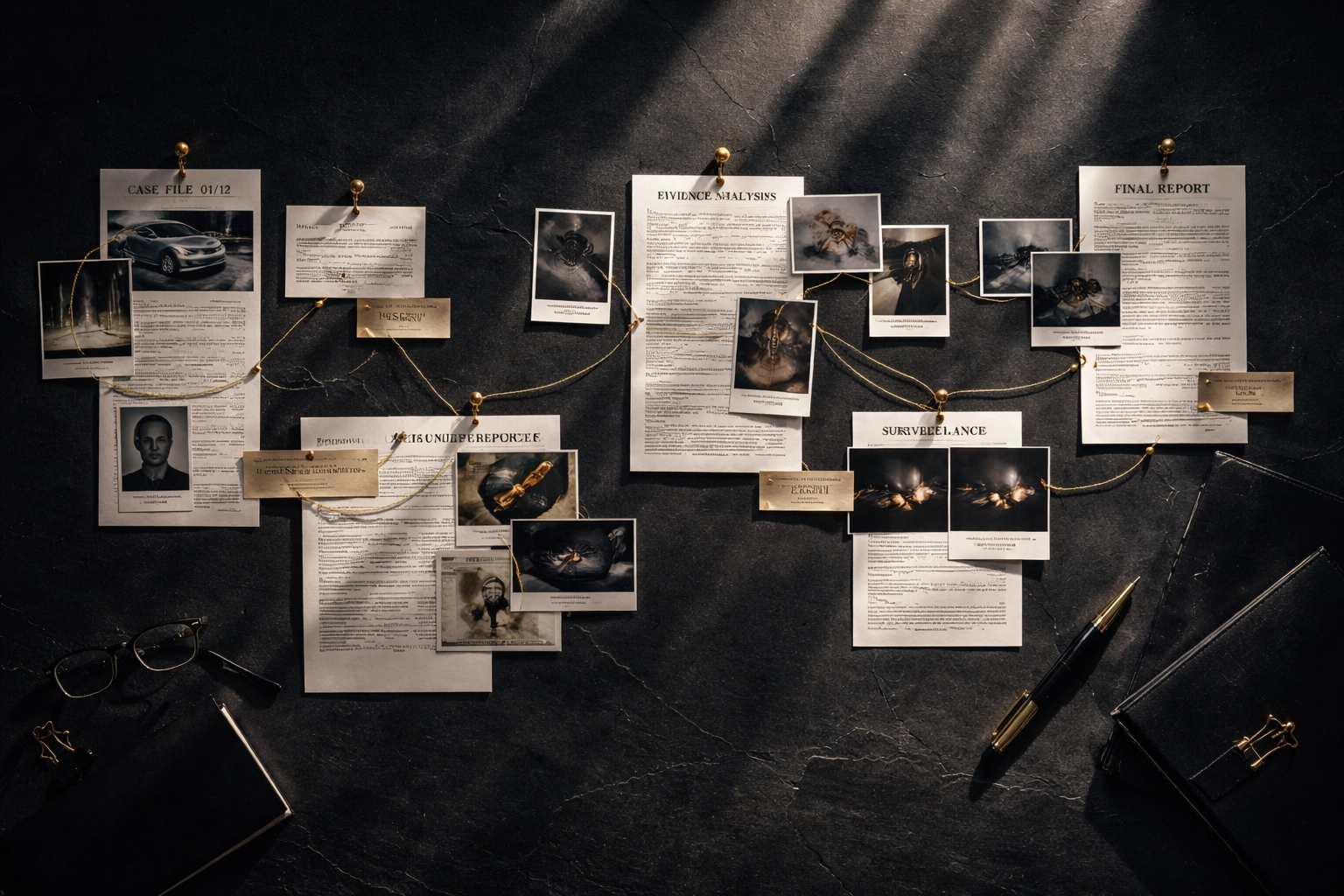
Experienced Florida litigators don’t just collect evidence. They build timelines.
Why? Because litigation evidence in Florida isn’t just about what happened: it’s about when, in what order, and what was known at each stage. Sequences matter. Inconsistencies destroy credibility. And a well-constructed chronology turns scattered documents into a compelling narrative.
How timelines strengthen your case:
- They establish cause and effect
- They expose gaps in the opposing party’s story
- They demonstrate patterns of behavior (like repeated missed payments or escalating harassment)
- They show what the defendant knew and when they knew it
How weak documentation hurts:
- Missing dates create ambiguity
- Contradictory statements undermine your credibility
- Gaps in records give the other side room to argue alternative explanations
If you’re building a case, start organizing your records chronologically now. Document dates, names, and events. Create a timeline before you ever speak to a lawyer: it will make the initial consultation far more productive.
Spoliation of Evidence: When Destruction Becomes a Separate Problem
Here’s something many people don’t realize until it’s too late: destroying evidence can be worse than having weak evidence.
Under Florida law and Eleventh Circuit federal court standards, once litigation is “reasonably anticipated,” all parties have a duty to preserve relevant evidence. This is called the preservation duty, and violating it has serious consequences.
What counts as spoliation?
- Deleting text messages or emails after a dispute arises
- Wiping phones or cloud accounts
- “Losing” contracts or financial records
- Altering documents, timestamps, or communications
- Failing to implement a litigation hold when a lawsuit becomes foreseeable
What happens if you spoliate evidence?
Florida courts can impose sanctions, including:
- Adverse inference instructions (the jury is told they can assume the destroyed evidence was harmful to your case)
- Exclusion of related evidence
- Monetary penalties
- Dismissal of claims or entry of default judgment
In federal court under the Eleventh Circuit, judges consider factors like bad faith, prejudice to the other party, and what’s necessary to cure the harm. But the bottom line is simple: destroying evidence makes you look guilty, and can tank your entire case.
If you’re the victim of spoliation, it can also become a separate cause of action against the offending party.
What To Do the Moment You Suspect a Dispute Is Coming
The best time to preserve evidence is before you need a lawyer. The second-best time is right now.
Immediate steps to protect your case:
- Stop deleting anything. No texts, emails, voicemails, or files: even if they seem unimportant.
- Preserve your devices. Don’t wipe phones, computers, or cloud accounts.
- Back up everything. Create copies of contracts, communications, financial records, and business files.
- Screenshot key conversations. Apps change. Messages disappear. Screenshots don’t lie.
- Create a chronology. Write down what happened, when, and who was involved: while your memory is fresh.
- Contact a Florida litigation attorney before communicating further. What you say next could help or hurt your case.
Acting early protects your claims. Waiting often means losing leverage or losing the ability to sue at all.
Why Evidence Determines Case Value
Strong evidence doesn’t just help you win. It changes how the entire case unfolds.
With solid documentation:
- Motions to dismiss are more likely to be denied
- Summary judgment becomes a real possibility in your favor
- Mediation leverage increases (the other side knows they’re exposed)
- Trial outcomes become more predictable
With weak or missing evidence:
- Your case may not survive early procedural challenges
- Settlement offers drop because the other side knows your proof is thin
- You’re forced to compromise on claims you know are legitimate
Evidence is leverage. The better your proof, the stronger your negotiating position, and the more likely you are to reach a favorable resolution without the expense and uncertainty of trial.
When to Speak With a Florida Litigation Attorney
If you’re wondering whether you have a case, the answer almost always starts with: what can you prove?
A Florida litigation attorney can evaluate your evidence, identify gaps, assess admissibility, and help you understand your exposure and leverage. Early legal review can:
- Prevent fatal mistakes (like accidental spoliation or damaging admissions)
- Preserve claims before statutes of limitations expire
- Position you strategically : even if you never file suit
Litigation isn’t just about filing lawsuits. It’s about knowing when to fight, when to negotiate, and how to build a case that forces accountability.
Bring Us the Paper Trail : We’ll Build the Strategy
At VIDALES LAW, we represent Florida individuals and businesses in business litigation, employment disputes, fraud claims, and complex civil cases. We’re not interested in stories without substance. We want your documents, your records, your timeline, and then we’ll tell you exactly where you stand.
If you’ve been wronged and you have the evidence to prove it, let’s talk strategy.
Contact VIDALES LAW for a consultation. We serve clients throughout Florida from our Miami office.
Frequently Asked Questions
What evidence do I need to sue in Florida?
You’ll need documentation that proves each element of your legal claim: liability, causation, and damages. This typically includes contracts, communications (emails, texts), financial records, and witness testimony. The specific evidence depends on your type of case, but the rule is consistent: if you can’t document it, you may not be able to prove it.
Can deleted texts hurt my case?
Absolutely. If litigation was reasonably foreseeable when you deleted them, you may face spoliation sanctions, including adverse inference instructions that allow a jury to assume the deleted content was harmful to your case. Never delete communications once a dispute arises.
What is spoliation of evidence in Florida?
Spoliation is the destruction, alteration, or failure to preserve evidence that’s relevant to pending or anticipated litigation. Under Florida law and Eleventh Circuit standards, spoliation can result in sanctions, exclusion of evidence, or even dismissal of your case.
How soon should I speak to a lawyer if I suspect a lawsuit?
As soon as possible. Early consultation helps preserve evidence, protect your legal rights, and avoid costly mistakes. Even if you’re not ready to file suit, a Florida litigation attorney can assess your position and help you prepare strategically.
