
![[HERO] Why Timelines Matter More Than Testimony](https://cdn.marblism.com/6tFwODk9Bgj.webp)
In Florida litigation, testimony alone rarely wins cases. Judges and juries often trust objective chronology over live witness accounts, and for good reason. Human memory fades, biases creep in, and even honest witnesses struggle to recall exact dates, times, and sequences months or years after the fact.
This article explains why a solid legal case timeline matters more than what people say happened: and how Florida courts apply evidentiary rules to separate verifiable facts from reconstructed narratives. If you're involved in litigation in Florida or federal court, understanding how timelines shape outcomes can mean the difference between winning and losing your case.
The Limits of Testimony in Florida Courts
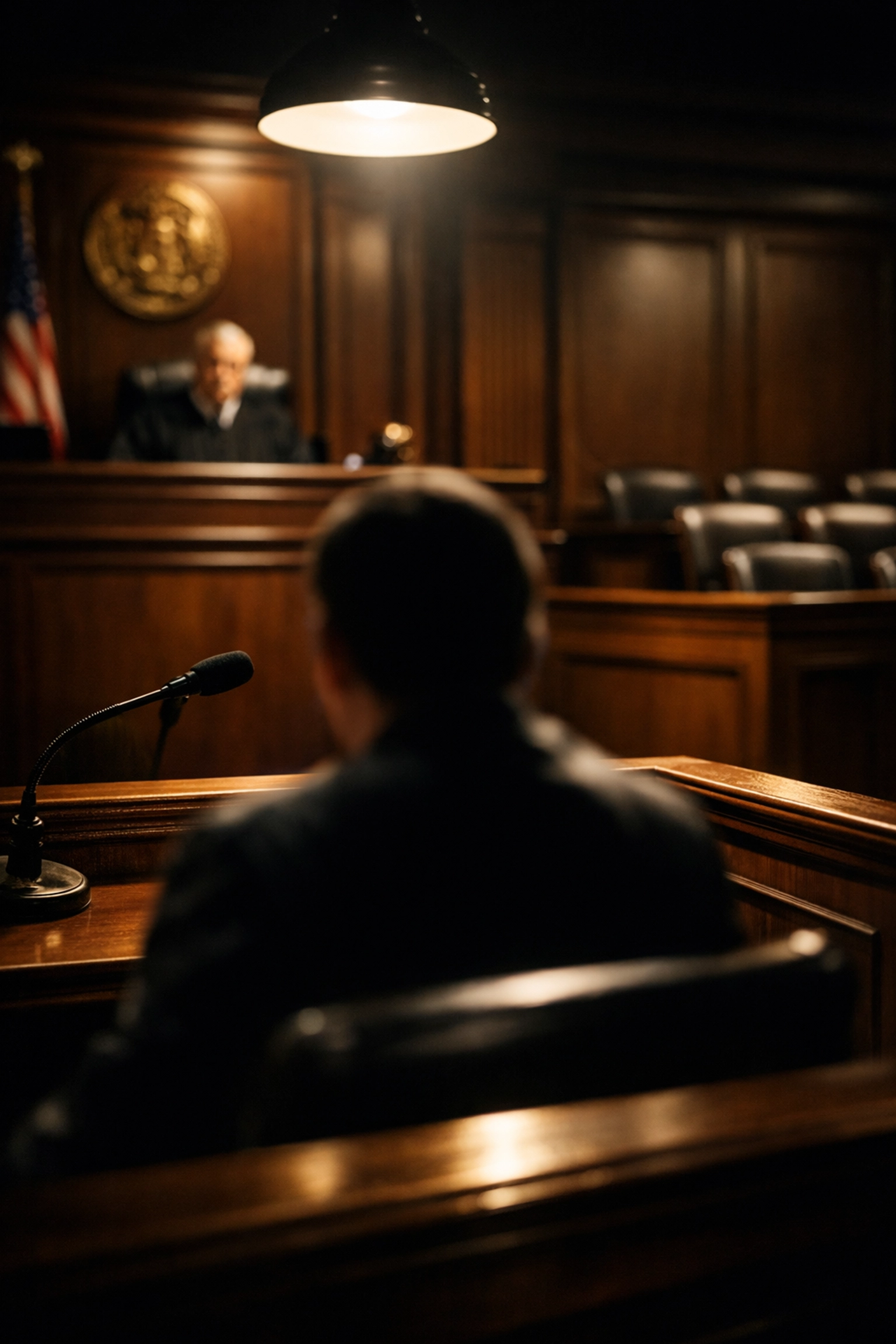
Human memory is unreliable. Courts in Florida and the Eleventh Circuit recognize this limitation when evaluating witness testimony. Under the Florida Rules of Evidence and Federal Rules of Evidence, testimony is admissible and often necessary: but it's rarely sufficient on its own to prove a civil claim in Florida.
Witnesses testify based on recollection, which degrades over time. Studies show that memory becomes less accurate within days, and by the time a case reaches trial, witnesses may be recalling events that happened years earlier. Cross-examination exposes these gaps. A skilled attorney will ask specific questions about dates, times, and surrounding circumstances, and inconsistencies emerge quickly.
Bias also affects credibility. Parties to a lawsuit have a vested interest in the outcome, and even neutral witnesses may hold unconscious preferences. Florida courts instruct juries to consider witness credibility carefully, weighing factors like consistency, demeanor, and corroboration. But when testimony conflicts with contemporaneous records or established timelines, courts usually favor the objective evidence.
Consider a retaliation claim under Florida's whistleblower statutes. An employee testifies that she was fired because she complained about illegal activity. Her employer testifies that the termination was performance-based. Without a clear timeline showing when the complaint occurred, when performance issues were documented, and when the termination decision was made, the case devolves into a credibility contest. Testimony alone cannot resolve the dispute: chronology can.
Why Courts Trust Chronology
Contemporaneous documentation carries evidentiary weight that testimony cannot match. Courts favor records created at or near the time of the events they describe because those records are less susceptible to bias, distortion, and memory degradation.
Under Florida Evidence Code Section 90.803(6), business records are admissible as exceptions to the hearsay rule if they were made at or near the time of the event by a person with knowledge, kept in the course of regularly conducted activity, and made as a regular practice. Federal Rule of Evidence 803(6) mirrors this principle. These records include emails, text messages, invoices, contracts, meeting notes, and internal memos: documents that establish what happened and when it happened.
Timestamps and metadata further enhance credibility. In federal litigation, courts analyze electronic discovery with precision. A text message sent at 3:47 p.m. on June 15 is more reliable than a witness who testifies, "It was sometime in mid-June, maybe in the afternoon." Digital records provide objective proof of sequence, and that sequence often decides the case.
Courts also value chronology because it establishes causation. In personal injury cases, the timeline of medical treatment, symptom onset, and diagnosis proves that an injury resulted from a specific incident. In contract disputes, the order of performance, notice, and breach determines liability. As we discussed in our article on written proof, documentation beats memory every time: but chronology takes that principle further by showing how events unfolded over time.
Florida litigation strategy depends on building an accurate, verifiable timeline. Judges ruling on summary judgment motions scrutinize chronology to determine whether material facts are disputed. If your timeline is solid and the opposing party's testimony contradicts it without explanation, the court may resolve the issue in your favor as a matter of law.
How Timelines Decide Real Cases
Legal case timelines decide outcomes in nearly every area of civil litigation in Florida. Let's examine how chronology drives decisions in employment disputes, contract litigation, personal injury claims, and business disputes.
In employment law, timing determines whether retaliation or discrimination claims survive. Florida's Civil Rights Act and Title VII require plaintiffs to show a causal connection between protected activity and adverse employment action. If an employee complains about harassment on March 1 and gets fired on March 5, the proximity suggests retaliation. But if the termination occurs six months later, the employer may argue that intervening performance issues justified the decision. A detailed timeline showing the sequence of complaints, investigations, warnings, and termination reveals the truth.
Contract litigation hinges on performance order and notice. Under Florida's Uniform Commercial Code and common law contract principles, a party claiming breach must prove that the other party failed to perform after proper notice. The timeline shows when performance was due, when notice of default was sent, when the breaching party had an opportunity to cure, and when damages accrued. Without a clear sequence, the case becomes speculative.
Personal injury cases require causation timelines. Plaintiffs must prove that the defendant's negligence caused specific injuries. Medical records, treatment dates, and diagnostic reports create a timeline that connects the accident to the harm. If the timeline shows that symptoms began after unrelated events or that treatment delays occurred without explanation, the defendant can argue that other factors contributed to the injury.
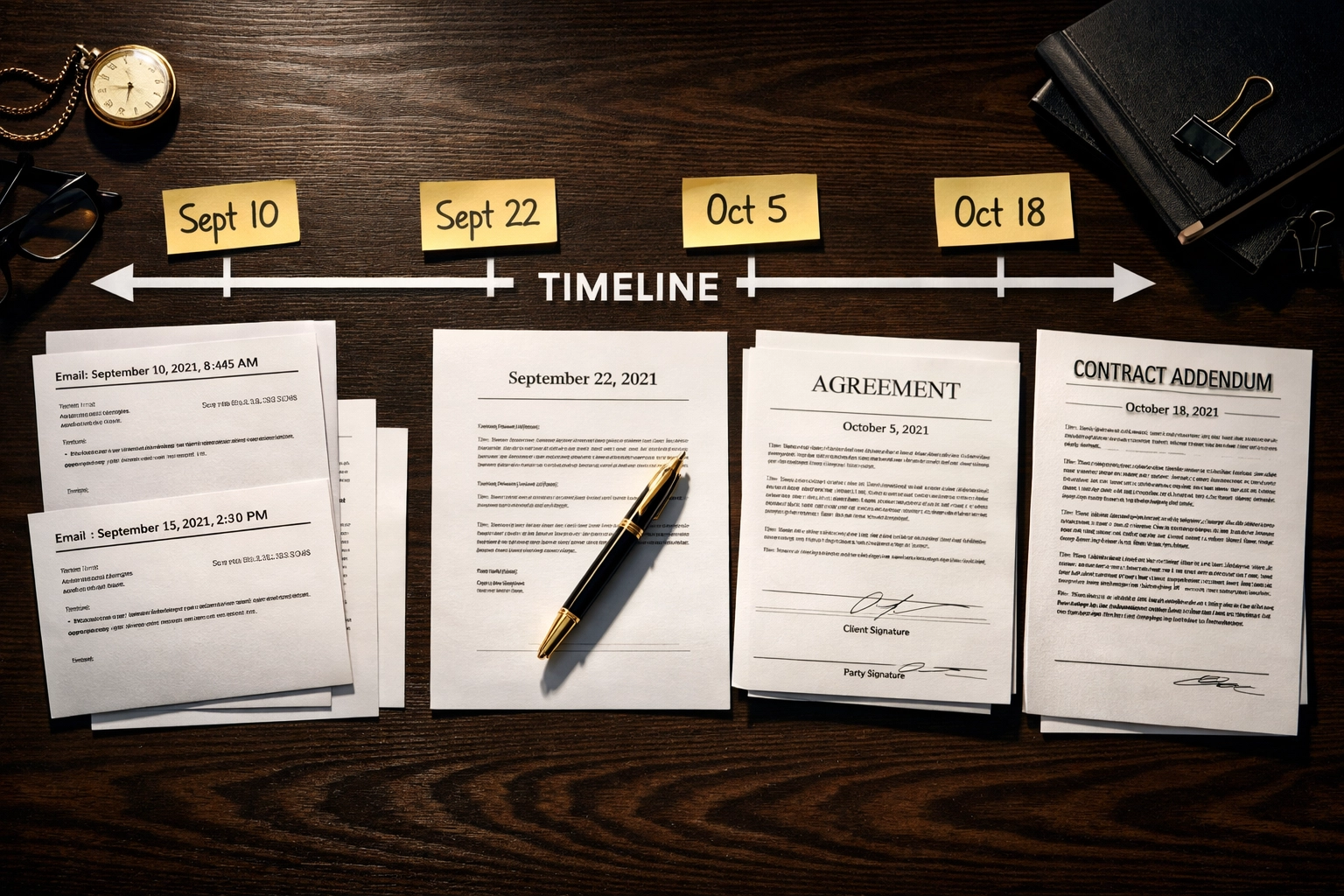
Business disputes often involve competing narratives about negotiations, representations, and promises. A timeline constructed from emails, contract drafts, and meeting notes establishes what each party knew and when they knew it. This is critical in fraud cases, where plaintiffs must prove that they reasonably relied on misrepresentations. If the timeline shows that the plaintiff received contradictory information before signing the agreement, reliance becomes questionable.
In each of these scenarios, evidence vs testimony is not a fair fight. Testimony explains context and intent, but chronology establishes the factual foundation. Courts in Florida and the Eleventh Circuit apply this principle consistently across civil litigation.
Burden of Proof and Procedural Reality
Proving a civil claim in Florida requires meeting specific procedural standards, and timelines play a critical role in satisfying the burden of proof. Under Florida Rules of Civil Procedure and Federal Rules of Civil Procedure, parties must present evidence sufficient to survive summary judgment and, ultimately, persuade a jury at trial.
Summary judgment under Florida Rule 1.510 and Federal Rule 56 allows courts to resolve cases without trial when no genuine issue of material fact exists. The moving party must show that the undisputed facts entitle them to judgment as a matter of law. A strong chronology can win summary judgment by demonstrating that the opposing party's version of events is unsupported by contemporaneous records.
For example, in a breach of contract case, the defendant may claim that performance was timely. But if the timeline shows delivery dates, payment deadlines, and notice letters that contradict the testimony, the court may grant summary judgment for the plaintiff. The timeline eliminates the factual dispute by proving, through objective evidence, that the defendant's account is inconsistent with reality.
The burden of proof in civil cases is preponderance of the evidence: more likely than not. A clear timeline tips the scale by showing that one party's version of events aligns with the documented sequence, while the other party's version does not. Judges and juries weigh credibility, and when testimony conflicts with a well-supported legal case timeline, the timeline usually prevails.
Gaps in chronology weaken claims and defenses. If a plaintiff cannot account for significant periods or if documents are missing from critical time frames, the defendant can argue that the claim is incomplete or fabricated. Conversely, a defendant who cannot explain why certain actions were delayed or why documentation is absent may face adverse inferences.
This is why we emphasized in Evidence Wins Cases that strong litigation depends on admissible proof, not narrative appeal. Timelines organize that proof into a persuasive framework that meets procedural requirements and satisfies evidentiary standards.
When Timeline Problems Destroy a Case
Inconsistent timelines destroy credibility. When a party's testimony changes over time: or when different witnesses provide conflicting accounts of the sequence: courts question the entire case.
Depositions expose timeline problems early. A witness may testify that an event occurred "in early 2024" during their deposition, but then testify at trial that it happened "in late 2023." Cross-examination highlights the inconsistency, and the jury questions whether the witness is reliable. Worse, if contemporaneous records contradict the testimony, the witness may be impeached entirely.
Missing documentation creates gaps that invite suspicion. If a plaintiff claims to have sent multiple complaints but cannot produce emails or letters, the defendant will argue that the complaints never happened. Courts in Florida apply the missing evidence doctrine, allowing juries to infer that missing evidence would have been unfavorable to the party who failed to preserve it.
Changing stories signal fabrication. A party who initially claims ignorance but later asserts knowledge based on new "recollections" loses credibility. Judges and juries recognize strategic narrative shifts, and those shifts often result in adverse findings.
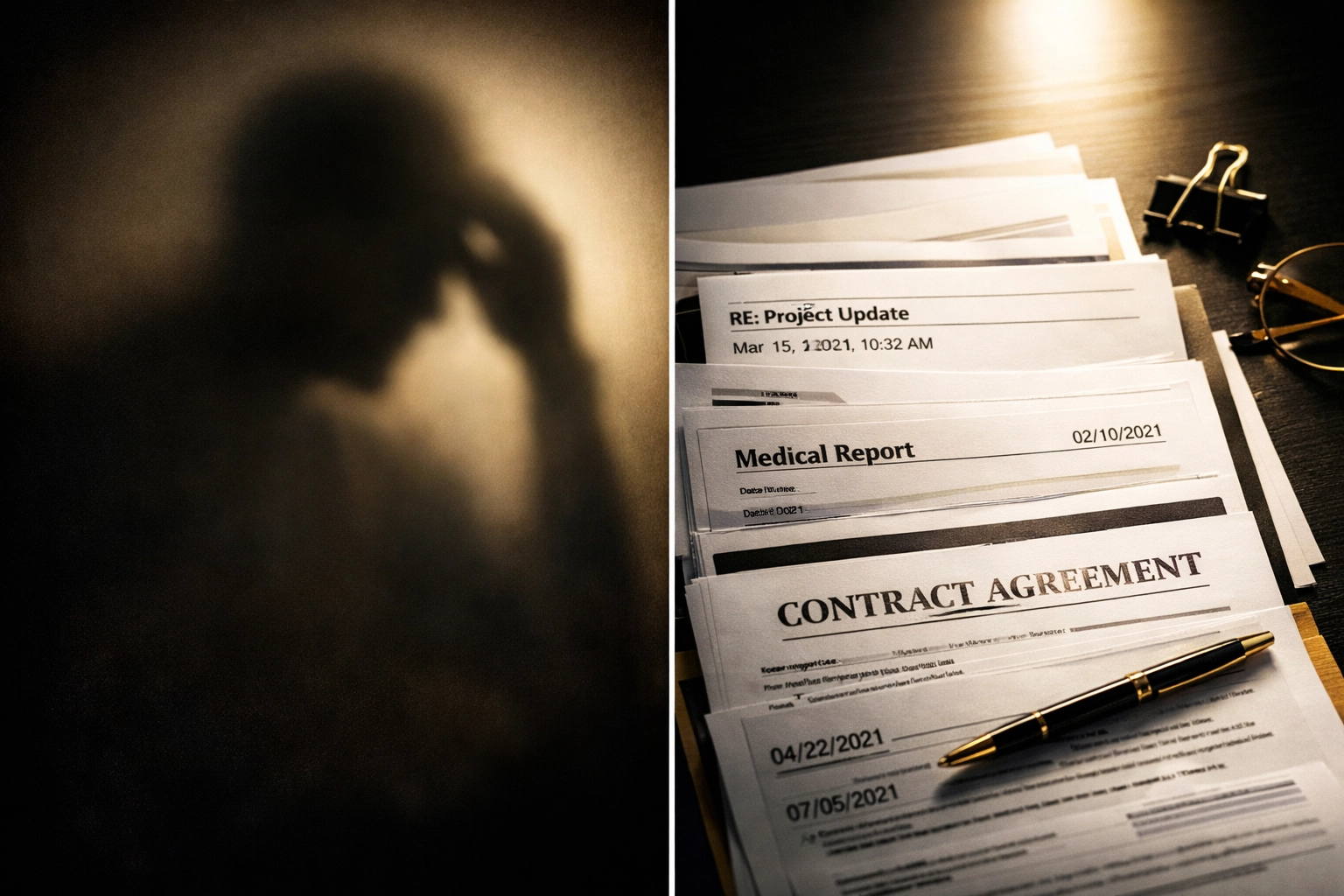
Timeline problems also arise from poor preservation practices. Florida Rules of Civil Procedure require parties to preserve relevant evidence once litigation is reasonably anticipated. Deleting emails, destroying documents, or failing to retain electronic records can result in sanctions, including adverse inference instructions or dismissal. We covered these preservation duties in our discussion of written proof, but the consequences extend beyond spoliation: timeline gaps themselves undermine the case.
In federal court, the Eleventh Circuit applies strict standards for spoliation and preservation. A party who intentionally destroys evidence or who fails to implement reasonable litigation holds faces serious sanctions. But even absent intentional misconduct, incomplete timelines weaken cases by leaving critical questions unanswered.
How Trial Lawyers Build Winning Timelines
Experienced trial attorneys understand that winning cases in Florida requires more than assembling evidence: it requires organizing that evidence into a coherent, verifiable chronology.
Chronology charts are standard tools in complex litigation. These charts list every relevant event in date order, citing the supporting document or testimony for each entry. At summary judgment, the chart becomes an exhibit that demonstrates the undisputed sequence of events. At trial, it helps the jury follow the narrative without confusion.
Aligning testimony to documents is critical. During deposition preparation, attorneys review the timeline with witnesses to ensure that their testimony matches the contemporaneous records. If a witness remembers an event differently than the documents reflect, the attorney must address the discrepancy before trial. Testimony that contradicts clear documentation invites impeachment.
Strategic use of timelines in mediation can facilitate settlement. A well-constructed timeline shows the opposing party the strength of your case and highlights weaknesses in their position. When both sides see the objective sequence, unrealistic settlement demands often give way to reasonable negotiation.
At trial, timelines simplify complex cases. Jurors cannot remember dozens of exhibits and hours of testimony, but a visual timeline anchors their understanding. Attorneys use timelines during opening statements to preview the case, during witness examination to provide context, and during closing arguments to tie the evidence together.
Florida litigation strategy increasingly relies on technology to build and present timelines. Litigation support software allows attorneys to link documents, deposition testimony, and trial exhibits to specific dates, creating a searchable, sortable database that strengthens case preparation and presentation.
But technology cannot replace judgment. A winning timeline requires more than chronological accuracy: it requires strategic emphasis. Attorneys highlight pivotal moments that establish liability or damages, and they use the timeline to expose weaknesses in the opposing party's case.
Practical Takeaways for Florida Litigants
If you're involved in a lawsuit in Florida or federal court, here's what you need to know about timelines and witness credibility.
First, preserve documents early. Once you anticipate litigation, implement a litigation hold that requires you and your employees to retain all relevant communications, records, and files. Failing to preserve evidence creates gaps in your timeline and exposes you to sanctions.
Second, write things down when they happen. Contemporaneous notes, emails, and memos carry evidentiary weight that later recollections do not. If something important occurs, document it immediately and save the record in a secure location.
Third, avoid relying on memory. Even honest witnesses struggle to recall details accurately after months or years. If you're preparing for a deposition or trial, review your timeline and supporting documents carefully. Do not guess or speculate: if you don't remember, say so.
Fourth, understand that courts analyze sequence carefully. Judges and juries pay close attention to the order of events, and inconsistencies undermine credibility. Before filing or defending a lawsuit, work with your attorney to construct a detailed chronology that aligns with the evidence.
Finally, recognize that strong cases in Florida are built on evidence and organized timelines: not narratives. Emotional appeals and persuasive storytelling have their place, but they cannot overcome a weak or inconsistent chronology. Courts under the Florida Rules of Evidence and Federal Rules of Evidence demand proof, and timelines provide that proof in a clear, verifiable format.

Conclusion
In Florida civil litigation, timelines matter more than testimony because they provide objective, contemporaneous proof that memory cannot match. Courts trust chronology over recollection, and a well-constructed legal case timeline often determines the outcome of disputes involving contracts, employment, personal injury, and business claims.
As we've discussed in previous articles on evidence and written proof, winning cases requires more than strong arguments: it requires admissible, organized evidence that satisfies procedural and evidentiary standards. Timelines are the framework that holds that evidence together.
If you're facing litigation in Florida, early legal strategy protects chronology before disputes escalate. Preserve your records, document events as they happen, and work with an attorney who understands how to build and present a compelling timeline. The difference between winning and losing often comes down to who can prove what happened and when: not who tells the better story.
For guidance on Florida litigation strategy and protecting your case through strong evidence and chronology, visit VIDALES LAW.
