
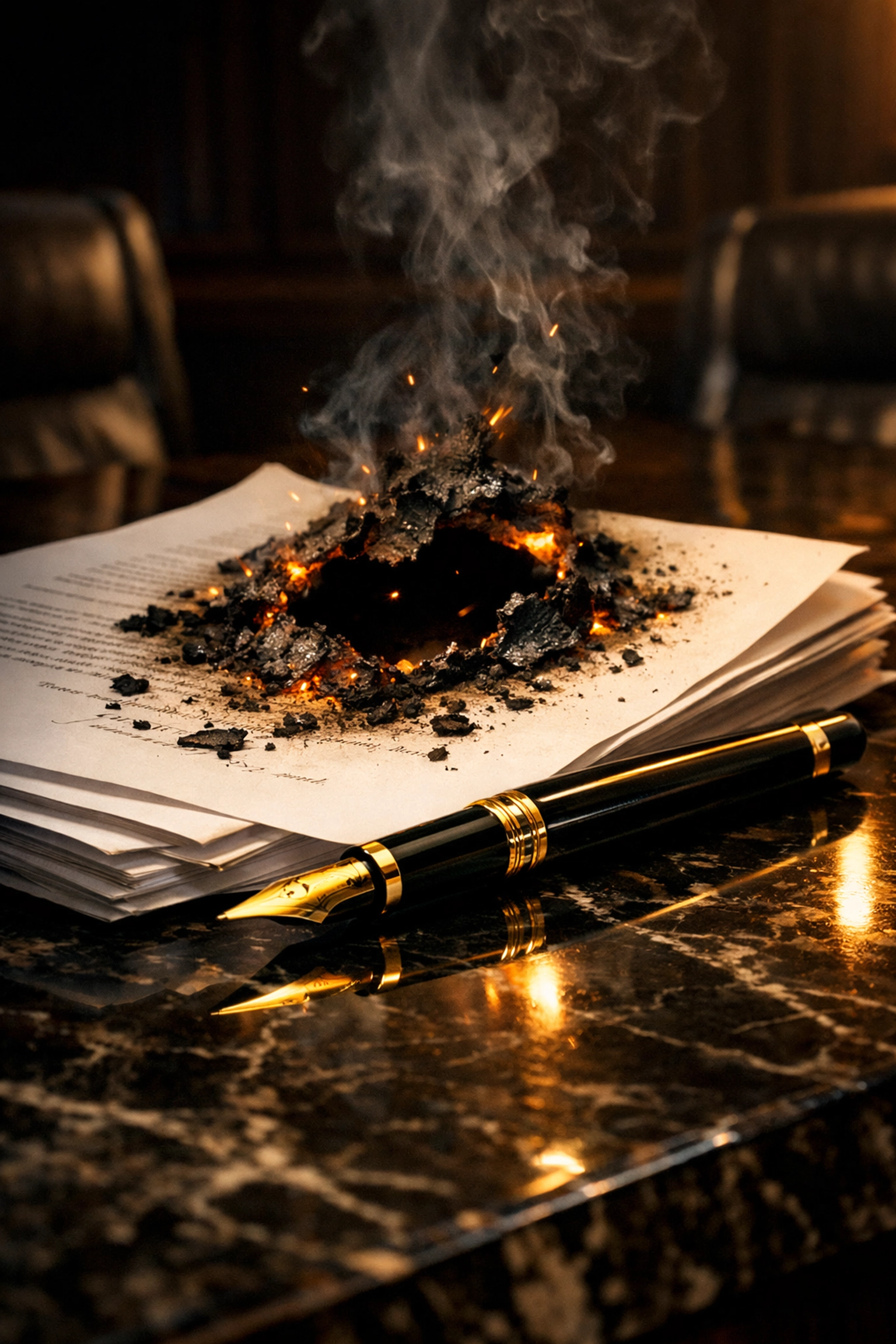
![[HERO] Spoliation of Evidence: How Deleting One Text Can Kill a Case](https://cdn.marblism.com/9BMPr9B2a6g.webp)
In modern Florida litigation, the most dangerous weapon against a claim or defense is often not a surprise witness or a smoking gun document. Instead, it is the absence of evidence that should have existed but was destroyed. This is known as the spoliation of evidence. While many litigants believe that deleting a text message or clearing an email thread is a private matter of digital housekeeping, doing so after a dispute has surfaced can lead to catastrophic legal consequences.
As we have discussed in previous articles, evidence wins cases, and timelines matter more than testimony. However, the integrity of that evidence and those timelines depends entirely on the preservation of records. When a party fails to maintain records, Florida courts and federal courts in the Eleventh Circuit have the authority to impose sanctions that can effectively end a case before it ever reaches a jury. Understanding the duty to preserve evidence is not just a technicality; it is a fundamental requirement for anyone involved in a civil dispute.
What Is Spoliation of Evidence?
Under Florida law, spoliation is defined as the destruction, significant alteration, or failure to preserve property for another’s use as evidence in pending or reasonably foreseeable litigation. In the contemporary legal environment, this almost always involves electronically stored information, or ESI. This includes text messages, emails, metadata, GPS data, and internal server logs.
Florida law recognizes two primary types of spoliation: intentional and negligent. Intentional spoliation occurs when a party purposefully deletes or destroys evidence to prevent it from being used in court. Negligent spoliation occurs when a party fails to take reasonable steps to protect evidence, even if they did not act with the specific intent to deceive.
Regardless of the actor's intent, the impact on the judicial process is the same. When evidence is missing, the fact-finder: whether a judge or a jury: is deprived of the objective truth. Because the legal system relies on a level playing field, courts take a dim view of any action that tilts the scales by removing relevant data. In Florida, if you had a duty to keep a record and you failed to do so, the law may assume you destroyed it because it was harmful to your position.
When the Duty to Preserve Evidence Begins
One of the most common misconceptions in Florida litigation is that the duty to preserve evidence begins only when a formal lawsuit is filed or when a process server appears at the door. This is a dangerous mistake.
In both Florida state courts and federal courts, the duty to preserve evidence arises when litigation is reasonably anticipated. This is a fact-intensive standard. If a business owner receives a letter from an attorney threatening a breach of contract claim, litigation is reasonably anticipated. If an employee is terminated and immediately sends an email complaining of discrimination, litigation is reasonably anticipated.
Once this threshold is met, the party in possession of relevant evidence must take affirmative steps to ensure its preservation. This often requires the issuance of a litigation hold Florida notice. A litigation hold is a formal internal directive to employees and IT departments to stop all routine document destruction policies. This includes disabling auto-delete functions on email servers and ensuring that mobile devices used for business purposes are not wiped or traded in.
The Eleventh Circuit has made it clear that a party cannot hide behind routine data-retention policies once the duty to preserve has attached. If your company’s policy is to delete emails every 90 days, you must suspend that policy the moment a dispute arises. Failure to do so is a common path toward a finding of spoliation of evidence Florida.
Florida Law on Spoliation
Florida state courts have significant discretion when addressing the destruction of evidence. The Florida Rules of Civil Procedure provide a framework for discovery, and when those rules are violated through spoliation, the court may choose from a menu of sanctions.
The most common remedy is the adverse inference instruction. In this scenario, the judge tells the jury that they may assume the missing evidence would have been unfavorable to the party that destroyed it. For a plaintiff or defendant, an adverse inference is often impossible to overcome. It allows the opposing counsel to argue that the deleted text message contained an admission of guilt or a confession of a breach.
Beyond jury instructions, Florida courts can impose more severe sanctions. These include:
- Fines and monetary assessments to cover the cost of the opposing party's efforts to recover the data.
- The striking of pleadings, which can result in a default judgment against a defendant or the dismissal of a plaintiff’s case.
- The exclusion of related testimony, preventing the spoliating party from offering their version of events because the underlying records are missing.
Judicial discretion plays a large role here. A judge will evaluate the degree of prejudice to the other party. If the deleted evidence was the only record of a key transaction, the sanctions will be significantly more severe than if the information could be found through other sources.

Federal Law and Rule 37(e)
For cases litigated in federal courts, such as the Southern or Middle Districts of Florida, the standards for ESI are governed by Federal Rule of Civil Procedure 37(e). This rule was specifically designed to handle the complexities of digital evidence.
Rule 37(e) creates a two-tiered system for sanctions. If ESI that should have been preserved is lost because a party failed to take reasonable steps, and it cannot be restored or replaced, the court may order measures no greater than necessary to cure the prejudice. This might include allowing additional discovery or shifting costs.
However, if the court finds that the party acted with the intent to deprive another party of the information’s use in the litigation, the sanctions become severe. Under Rule 37(e)(2), the court may:
- Presume that the lost information was unfavorable to the party.
- Instruct the jury that it may or must presume the information was unfavorable.
- Dismiss the action or enter a default judgment.
The intent to deprive standard is a high bar, but federal judges in the Eleventh Circuit are increasingly sophisticated in spotting digital footprints. If a party wipes a phone or deletes a specific folder of emails immediately after receiving a preservation demand, federal courts are likely to find the requisite intent.
Real-World Consequences in Litigation
The impact of spoliation is best understood through the lens of specific practice areas where VIDALES LAW routinely operates.
In employment law disputes, spoliation often centers on communications between supervisors and subordinates. If an employee alleges retaliation, the timing of the decision is critical. If a manager deletes text messages from the day the employee complained, the manager’s credibility is effectively destroyed. Even if the manager claims the deletion was accidental, the court may allow the jury to infer the messages contained retaliatory intent.
In contract disputes and business litigation, the destruction of evidence can shift the entire value of a claim. Consider a commission dispute where the terms of a verbal agreement were reinforced in a series of texts. If the employer deletes those texts while the employee is demanding payment, the employer may face sanctions for deleting evidence that prove the contract existed. This turns a defensible case into a liability nightmare.
Personal injury and medical malpractice cases also rely heavily on contemporaneous records. If a facility deletes surveillance footage of a slip and fall after being asked to save it, or if a medical provider alters a chart after a negative outcome, the legal repercussions are swift. In these instances, the focus shifts from the original accident to the cover-up, which juries find far more offensive.
Common Mistakes That Lead to Spoliation Problems
Most spoliation issues arise not from a criminal mastermind trying to hide the truth, but from individuals making poor decisions under stress. Common mistakes include:
- Cleaning up threads: Litigants often feel the urge to delete unprofessional or embarrassing messages that are irrelevant to the legal claim. However, deleting any part of a conversation thread can look like an attempt to hide relevant facts.
- Device upgrades: Trading in a phone that contains business communications while a dispute is active is a frequent source of spoliation.
- Reliance on auto-delete: Failing to realize that IT systems are set to automatically purge old data.
- Social media deletions: Removing posts or photos that might contradict a claim of injury or emotional distress.
Once a dispute is on the horizon, the only safe course of action is to stop all deletion activity. Even if the information is embarrassing, it is almost always better to explain a bad document than to explain why that document is missing.
How Trial Lawyers Use Spoliation Strategically
From a litigation perspective, spoliation is a powerful strategic tool. If we represent a party and discover that the opponent has destroyed evidence, we immediately move for discovery sanctions. This involves filing motions to compel and requesting evidentiary hearings where IT experts may testify about how and when the data disappeared.
A successful spoliation motion can change the trajectory of a case. It provides immense leverage in settlement negotiations and mediation. A defendant who is facing an adverse inference instruction at trial is often willing to pay a premium to avoid the risk of a jury being told they are untrustworthy.
Conversely, we work with our clients to audit their data preservation practices early. By implementing a litigation hold Florida strategy from the outset, we insulate our clients from accusations of destruction of evidence. This protection allows us to focus on the merits of the case rather than defending discovery conduct.
Practical Takeaways for Florida Litigants
The lesson for any business owner or individual involved in a dispute is clear: preserve first, analyze later. If you believe a legal conflict is possible, you should:
- Issue a written litigation hold to all relevant parties and IT staff immediately.
- Disable auto-delete features on all platforms, including email, Slack, and WhatsApp.
- Secure physical evidence and original documents in a safe location.
- Consult with legal counsel to ensure your preservation efforts meet the standards of the Florida Rules of Civil Procedure or the Federal Rules.
- Do not attempt to "curate" your records. Let your attorney review the evidence and determine what is privileged or irrelevant through the proper legal channels.
Conclusion
In Florida courts, credibility is the most valuable currency a litigant possesses. When you delete a text or an email after a dispute has begun, you are spending that currency in a way that you can never recover. Spoliation of evidence Florida standards are designed to protect the integrity of the law, and judges do not hesitate to punish those who circumvent the rules.
Whether you are a business owner protecting your company or an individual seeking justice, your case depends on the evidence you keep. At VIDALES LAW, we understand that building a strong case requires more than just a good narrative; it requires a commitment to the facts and a strategic approach to evidence preservation. If you are facing a potential dispute, the time to protect your record is now, before a single click of the delete button changes the outcome of your case.
For more information on how to protect your business or your legal rights, you can explore our resources on civil litigation and contract disputes. Understanding the rules of engagement in Florida's state and federal courts is the first step toward a successful resolution. Reach out to VIDALES LAW to ensure your evidence is protected and your strategy is sound.
